
From helping their employees infected with the Covid-19 virus to vaccinating them or supporting the families of those who might have succumbed to the infection, several companies in India are trying to do their bit in this difficult time. Some have even widened their support net to include all stakeholders as well as an extended community. To the families of the employees it lost to Covid-19, Noida-headquartered IT services and consulting company HCL Technologies is, for instance, paying salary for a year, medical insurance for three years and extending support for their children's education for five years.

Increasing the duties on auto parts and putting an additional cess on petrol and diesel could drive up costs of vehicles, specially where volumes are low and localisation is not viable.
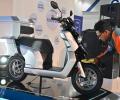
as the FAME II deadline of March 31, 2024, nears, EV manufacturers are worried about their investments and future plans.


The electric vehicle evolution in India's passenger vehicle market has remained frozen in time and may see limited adoption over the next decade, experts say.
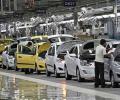
Maruti Suzuki's inventory across its dealerships is a 100,000 vehicles at the end of any month. However, it was only 34,000 vehicles at the end of December 2016.

While hybrids, CNG and biofuels found favour in 2018 among many carmakers including Maruti Suzuki, Mercedes-Benz, Toyota and Honda, others such as M&M and Tata Motors have shown full faith in electric vehicles.

The company, which sells every second car in the domestic market, said it expected production and sales to grow between 4 per cent and 8 per cent for the financial year started in April.

Morgan Stanley Sales & Trading, US, believes the stock is better value for money than others and has a upside as high as 73 per cent. A slowdown in the economy has hit demand and led to a fall in overall consumption in an auto market which till recently was one of the fastest growing in the world.

Prime Minister Modi, who is in Japan on a two-day visit to attend a summit of the Quad leaders at the invitation of his Japanese counterpart Fumio Kishida, penned an op-ed on the vibrant relations between India and Japan in the Yomiuri Shimbun.

With multiple options in the compact sport utility vehicle (SUV) and compact sedan space, the mid-size sedan seems to be losing its charm among customers.

The eligibility for loan issuance for salaried individual for car purchase has been raised from Rs 250,000 per annum to Rs 600,000 per annum, as per the recent circular of the bank.

Lack of visibility on rates makes companies apprehensive.

Ruural markets contribute a significant chunk of SUV sales and there was a slowdown in demand from semi-urban and rural areas.

Declining motorcycle sales remained a cause of worry.

The challenges of transition to stricter emission norm BS-VI from BS-IV and compliance to new safety norms thereby making vehicles costlier are lurking around the sector.

The change in stance follows a strong opposition by automakers of the proposed government plan to ban two-wheelers (below 150cc) and three-wheelers by 2023 and 2025, respectively

Vehicle sales across categories registered an increase of 5.03 per cent to 16,03,292 units from 15,26,514 units in November 2013.

These risks would be significantly reduced if the cars had to comply with the UN test regulation for frontal and side impact.

The increase in PV sales in September was driven by festive season purchases, with SUV models like Maruti Suzuki's Brezza, Hyundai Creta, Mahindra Scorpio, Ford Ecosport and Honda W-RV witnessing good traction

Market leader Maruti Suzuki sold 51,274 units, down 49.61 per cent from the same month last year. Hyundai Motor sold 21,320 units, a decline of 49.25 per cent and Mahindra & Mahindra sold 8,075 units, down 54.54 per cent.

Apart from a pavilion of vintage cars, there will be a Bollywood corner
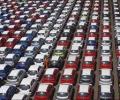
India, is home to 15% of all traffic fatalities.

Skoda Auto, Volvo Cars and Daimler India Commercial Vehicles are not participating in the Expo.

The company had identified some emission-related issue with Tavera and some quality issue with Sail.

From April 2020, manufacturers will have to hike prices of diesel cars sharply to accommodate the costs incurred in the transition to BS VI emission norms, and widening the gap between a diesel and petrol car.
Vehicle sales across categories registered a decline of 8.62 per cent to 20,86,358 units from 22,83,262 units in May 2018.

While home-grown firms like Tata and Mahindra have been actively participating in the government's e-mobility mission, by launching electrified versions of their existing models, the global firms believe electric is not the best solution for a country where the primary source of power generation is coal, and where infrastructure is a big impediment.

This is the seventh straight month of growth

'Right now, we are increasing production in anticipation of the demand during the festive season.' 'If the demand doesn't come back, all the production will languish in the factories.'
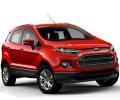
Customers have started to factor in the narrowing gap between petrol and diesel and the premium that needs to be paid for a diesel vehicle.

You can make all the speeches you want, you cannot argue against 39 straight months of slowing, observes Aakar Patel.

Demand for passenger vehicles has been driven by new models, especially in the SUV category with the likes of Maruti Vitara Brezza and Hyundai Creta clocking good numbers

Passenger vehicle wholesales in India slipped to a 10-year low in the April-December this fiscal, and the industry will have to work hard to regain better volumes and business health, industry body SIAM said on Thursday.

As many as 25-30 new products, upgrades and variants will be launched by the Mumbai-based company in the second half of the financial year, even as hope of a demand turnaround remains distant.

Bankers say loan demand was more muted this festival season than last year.

'Nobody is talking about the inequality that is going to come.'
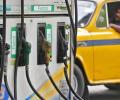
What's driving consumers to petrol cars? Ajay Modi finds out.

Urban and rural FMCG sales growth data for the last five quarters show the latter outperformed the former consistently.
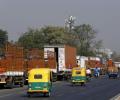
The industry said if the policy was announced, it would have taken 28 million vehicles bought before March 2005 off the road.
 © 2026 Rediff.com - Advertise with us - Disclaimer - Privacy Policy - Sitemap - Feedback - About us - Terms of use - Grievances